Spark Igniter System for a Rocket Engine

by Bill Nelson, RRS.ORG

This article describes the simple buzz box design I made for the GALCIT engine replica project done at the RRS MTA in early June of 2024.

For some background, the GALCIT replica engine design was a simple single-port of injection, slab-type of early prototype engine design using liquid methanol and gaseous oxygen. The engine was vertically fired and initially used pyrotechnic igniters set into the narrow diameter throat. After initial tests at the RRS MTA in 2024, just like what the Caltech team discovered in the Arroyo Seco in 1936, we found that pyrotechnic-ignition was too difficult to do given the problem of physical retention of the igniter in the engine. The pneumatic gust from the initial valve openings would eject the pyrotechnic igniters before the chamber mixture could be lit.
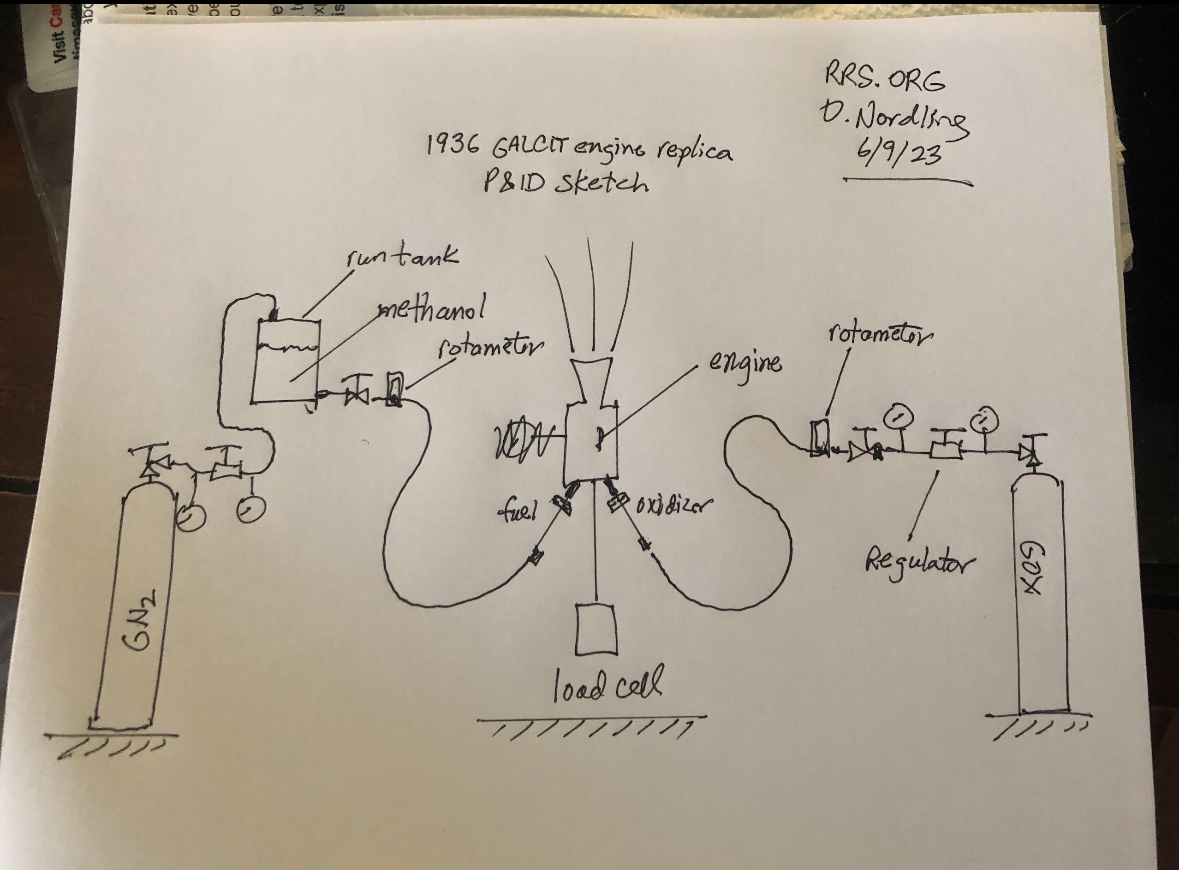
From one of the legacy JPL photos, it was clear that an automotive Model-T buzzbox and spark plug type of igniter was installed in the side of a later iteration of the engine design. When the RRS team made this modification, we had success in more reliable ignition of the engine. The problem was how to replicate a technology that has been obsolete for decades. Thankfully, there’s the internet and a lot of hobbyists and tinkerers.

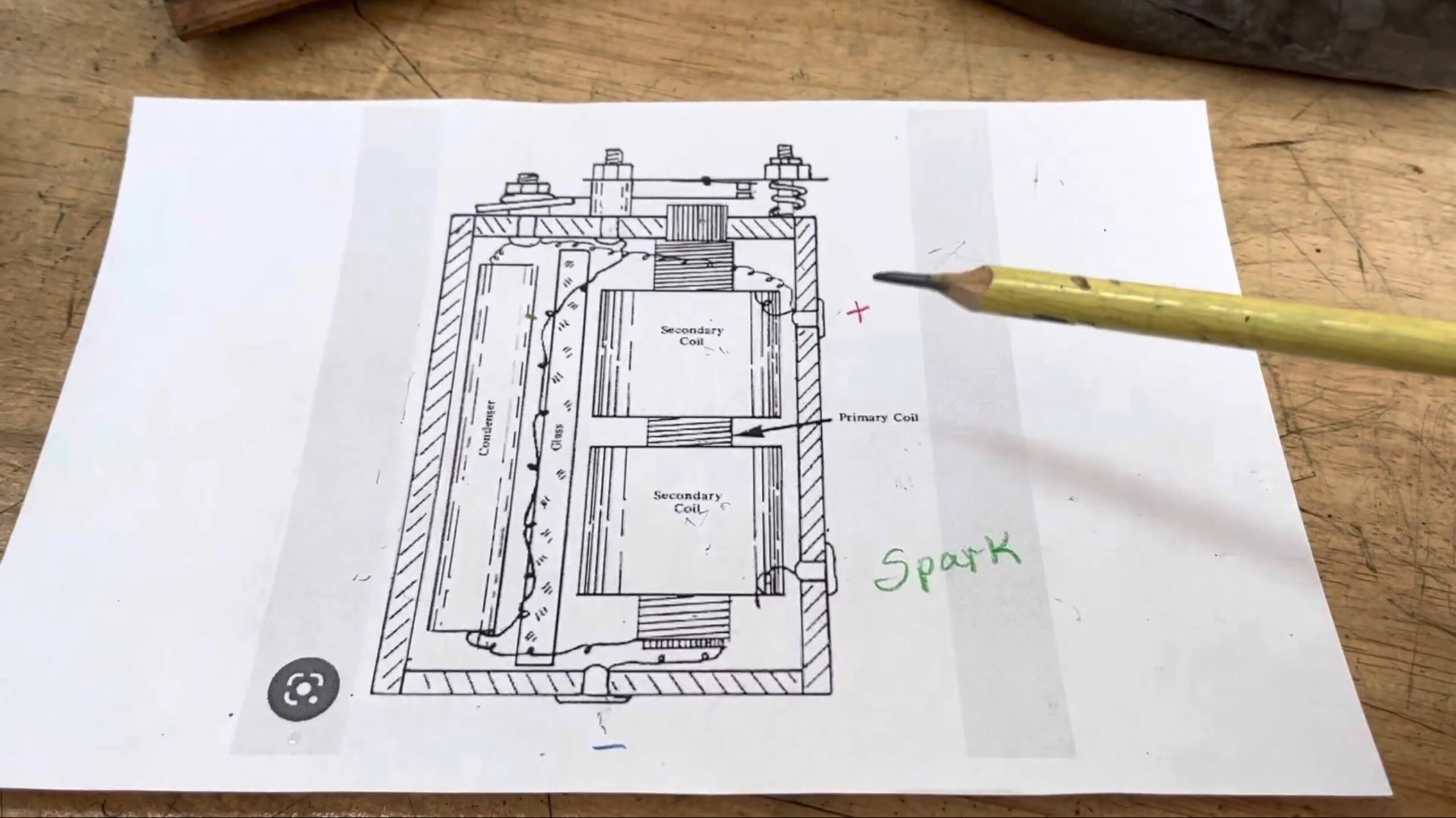
There are many other circuits with lots of electronics that can also be made if someone is so inclined. Most of these use ‘555’ timer chips, transistors, and other solid-state components and can be accessed with a search on the web. I’m sure there are many knowledgeable electronics people that could design their own.

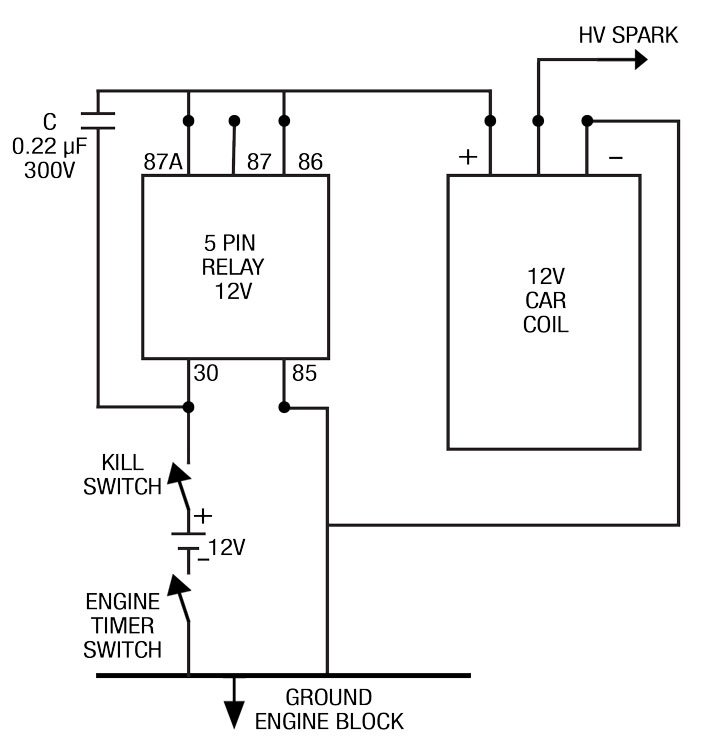
My design uses an automotive (transformer) coil, a capacitor (sometimes called a ‘condensor’), and a 5-pole automotive relay that is a single-pole, double-throw relay (SPDT) type. There is another simple approach which I will describe later.

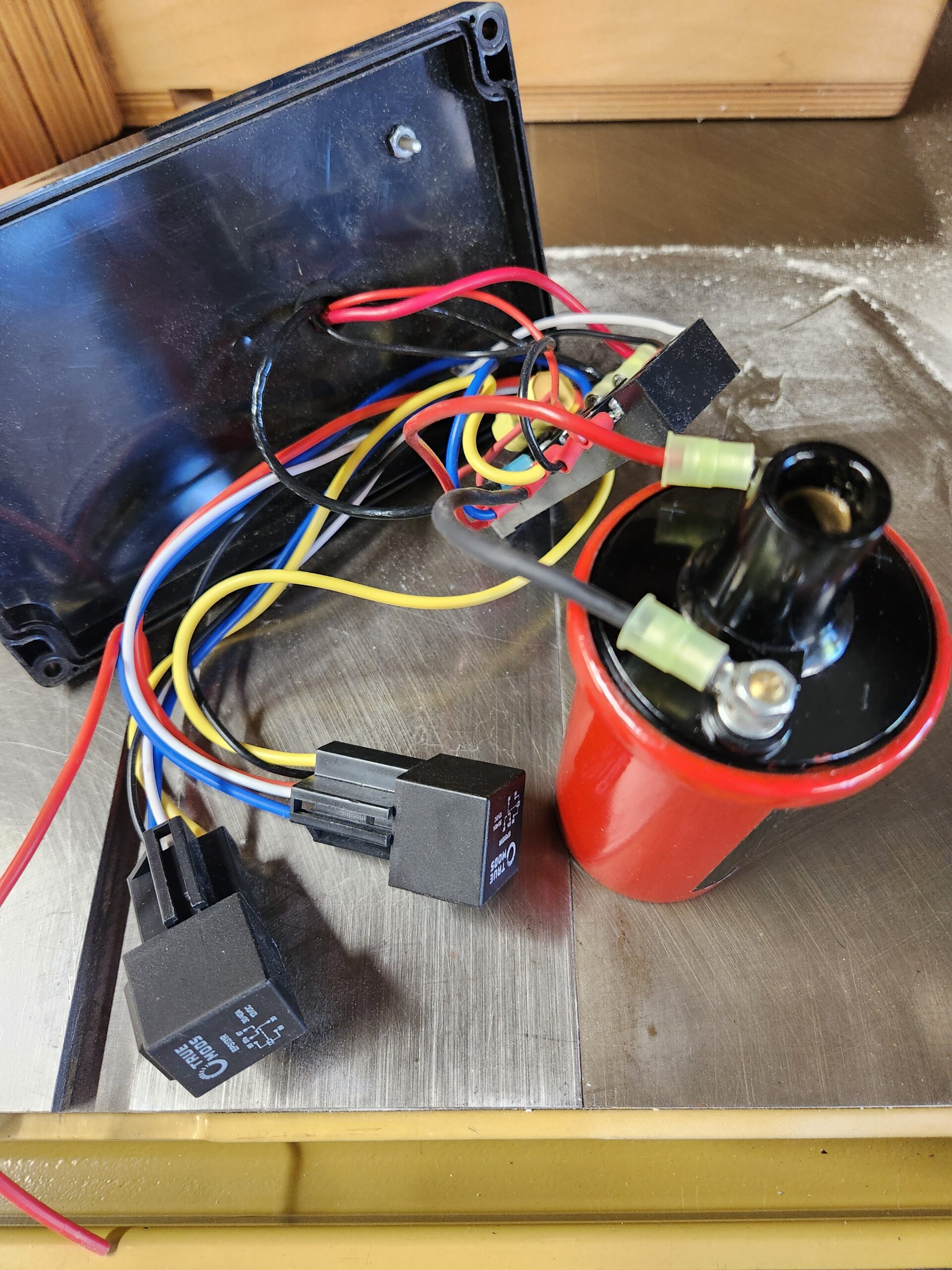
The circuit I used is very simple. When 12-volt DC power is applied to the relay pin marked ‘87A’ it will switch on and off at a rapid rate until the power is turned off. The relay will energize the automotive coil which in turn will fire the spark plug. As long as the relay is being energized, the coil will continue to produce sparks. This was advantageous to reliably firing the GALCIT replica engine with the liquid methanol and gaseous oxygen mixture. This simple system would most likely help others achieve ignition when other systems might fail. Below is a circuit diagram and a photo of the box I hurriedly made after our RRS team had trouble with the pyrotechnic firing approach. Only one relay was in the firing circuit, the other was a relay to control the circuit remotely from a separate battery.
Another approach uses a coil on plug design. These coils are used in modern cars. Instead of having one coil for all the cylinders, each cylinder has its own spark coil. I have not tried this but it appears to be simpler and have a much greater spark rate and a larger spark. Here is a circuit diagram and picture of one of these systems. This looks much better in my opinion and I will build one to experiment with. The write-up doesn’t say exactly how but I assume the spark pulse is generated as long as power is applied to the circuit.
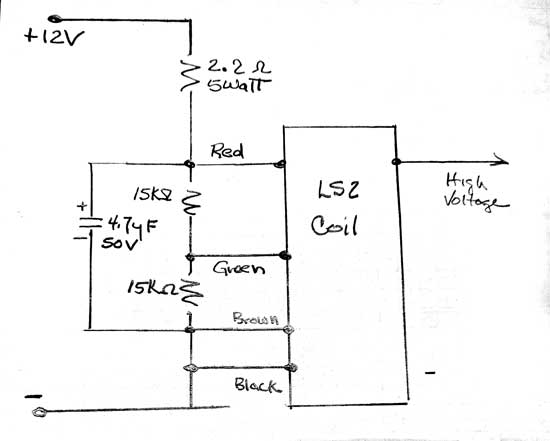
Both of the above circuits can be found at the link given below, searching under the term ‘buzz box’

gasenginemagazine.com

The first two listings are the ones to read.

There is not much more than this to these buzz box circuits except if you want to make it more complicated and expensive. These circuits just use common sparkplugs, hobby model gas engines (for model airplanes), small engines like those for weed whippers and chainsaws, or even spark ignition systems used in automobiles. There are also specialized plugs made just for rocket engines but much more expensive.

Below are some photos from the GALCIT replica engine in early June 2024 and how the sparkplug was mounted into the chamber interior. This is the middle ring of the modular slab engine design. We had one port drilled for mounting the sparkplug and the other tapped for a pressure gauge which we didn’t use (plugged).
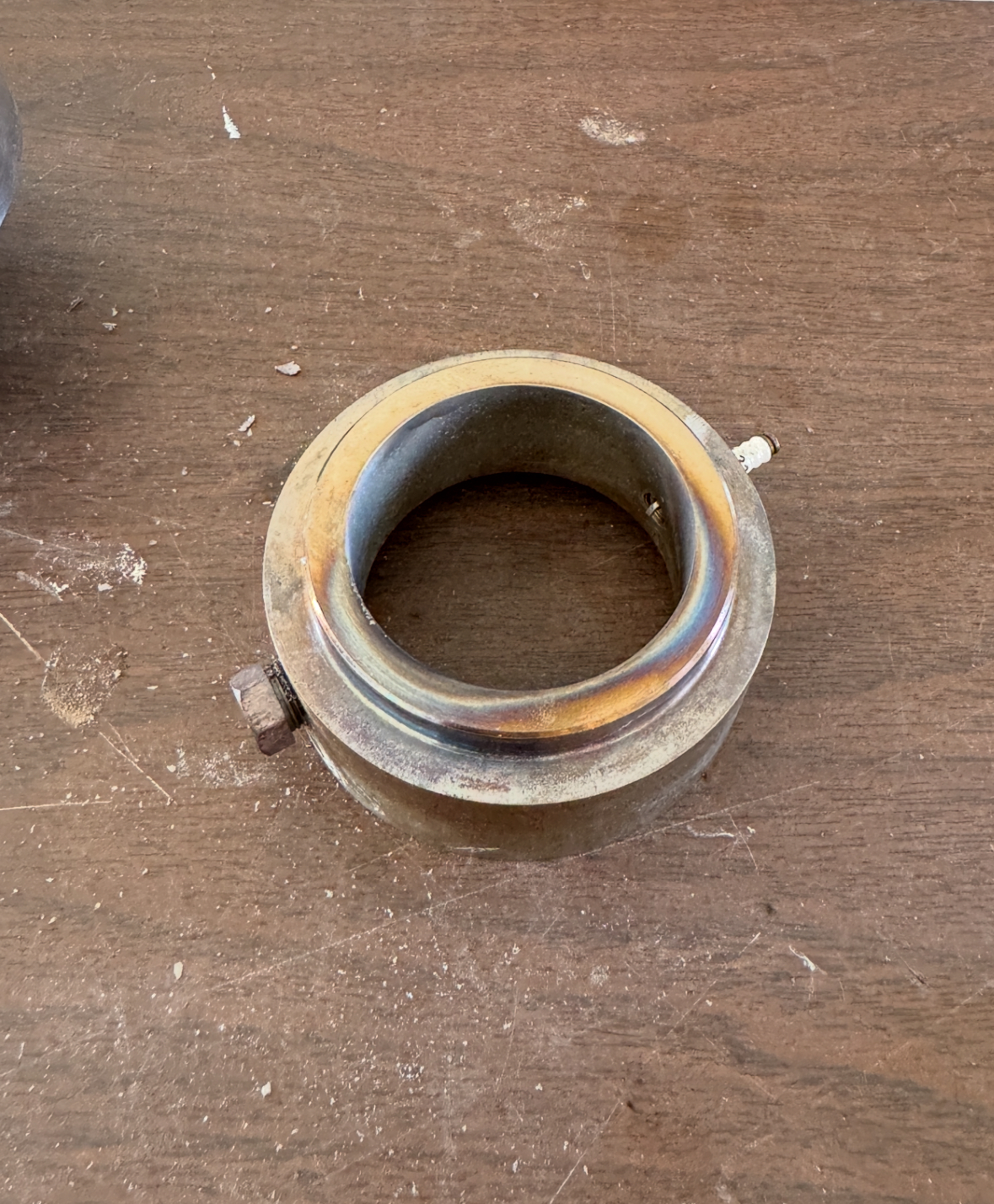
The spark plug we used lasted many firings in the rocket chamber with almost no damage other than some discoloration.
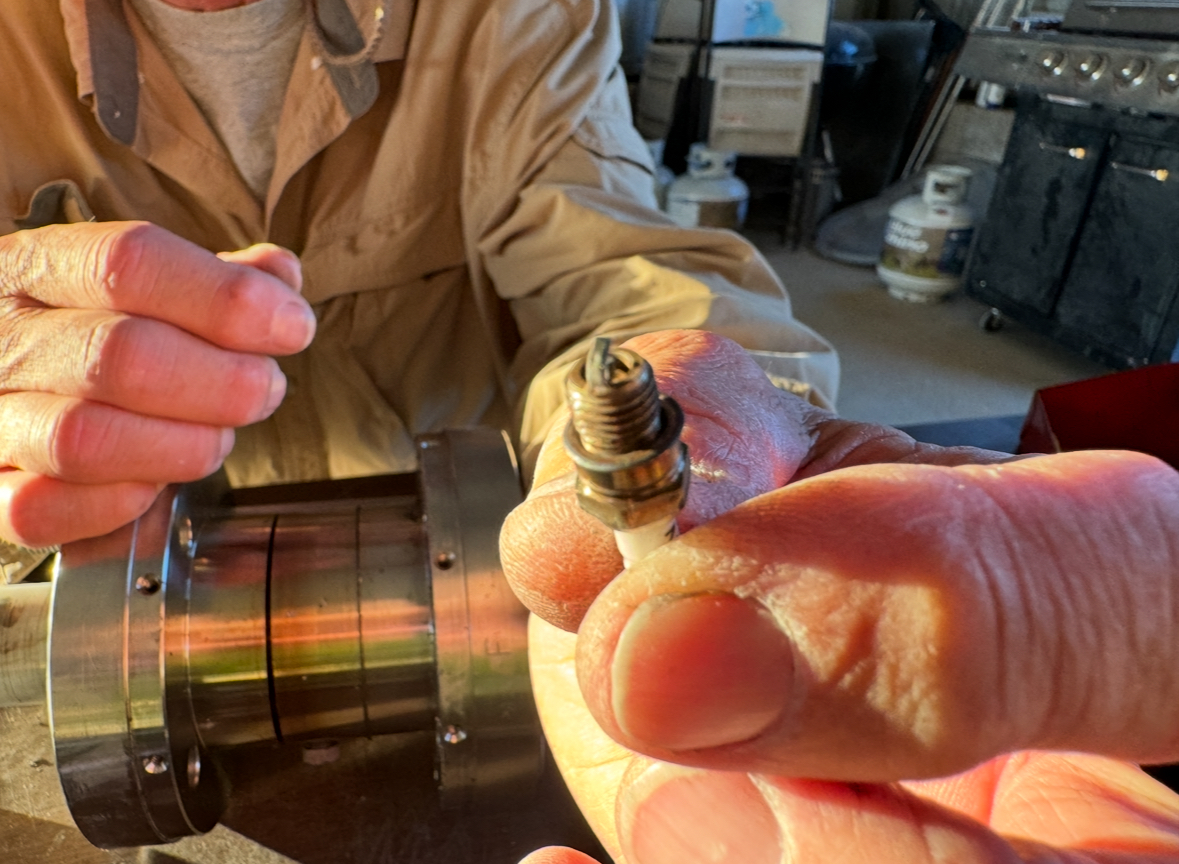
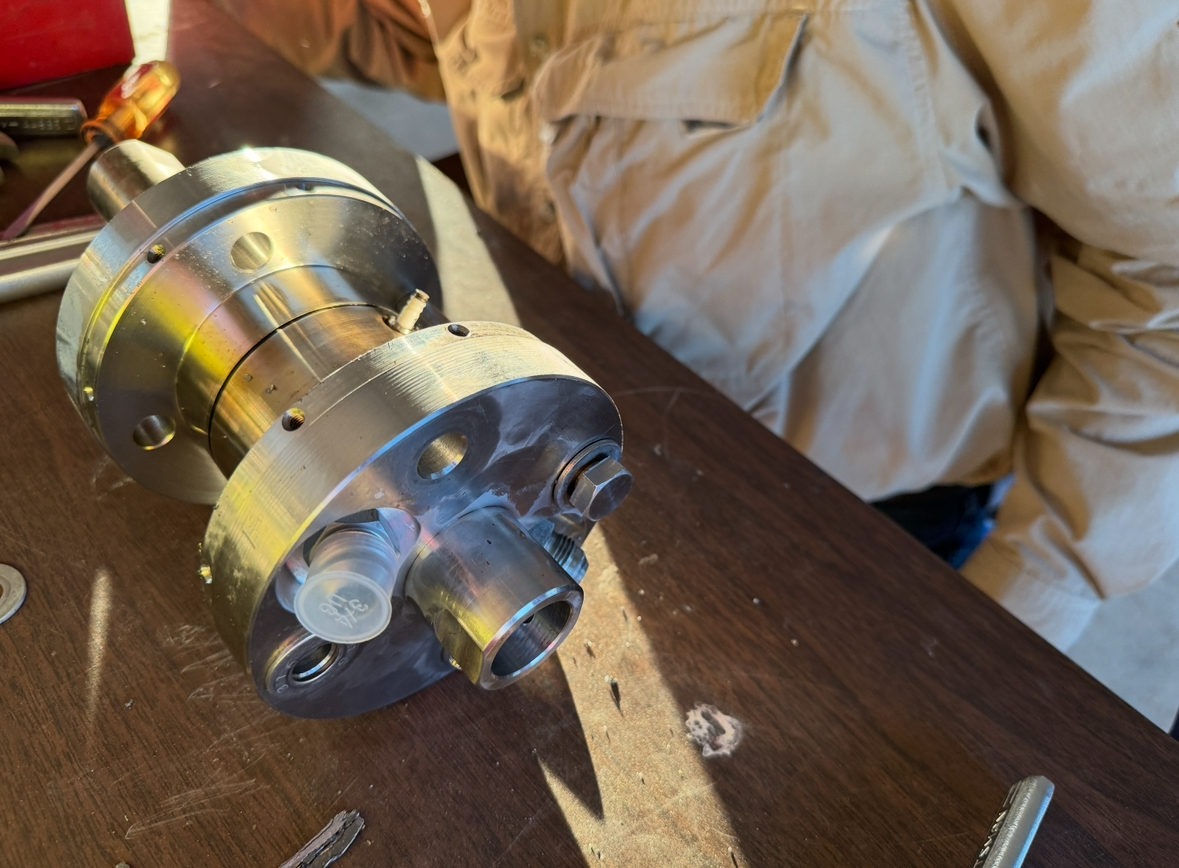
The spark plug can be seen sticking out of the middle ring of the engine. The injector ports are seen in the foreground, one still has a plastic cap covering it. The raised circular port is to mate the engine to its supporting thrust stand shaft as the engine fires upward.

Many liquid engines at the RRS MTA have nozzle-mounted pyrotechnic igniters which can work with the right design, firing sequence and precautions, but there are some significant problems and hazards with this approach.

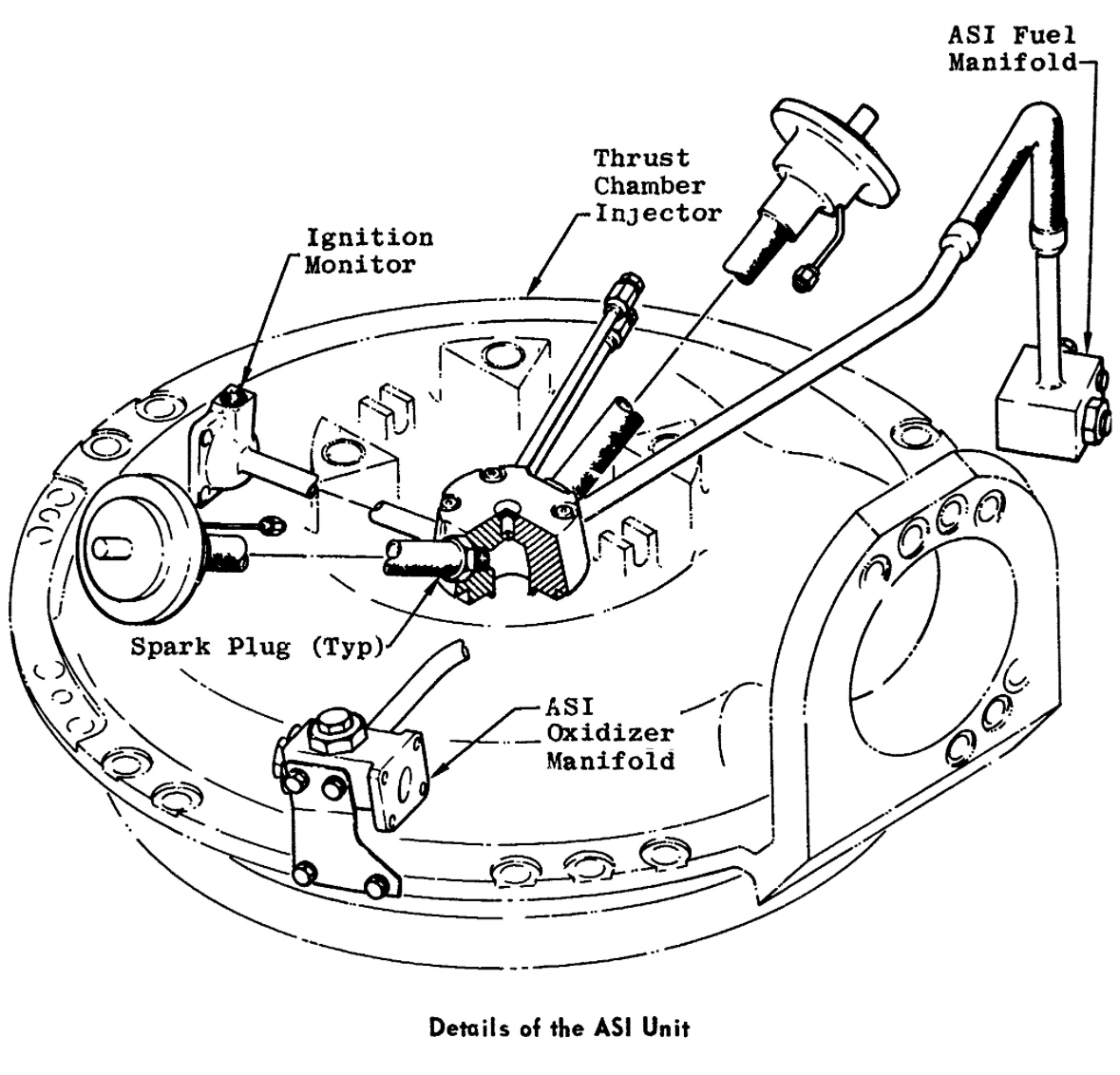
Modern rocket engines often have their igniters mounted into the injector body or chamber wall near the injector face, but this is easier to do with the greater area available on larger scale engines. Often, these augmented spark igniter (ASI) systems have a small fuel and oxidizer supply to provide a readily ignitable localized mixture to touch off the larger propellant flows in the injector. The picture below is from the Apollo-era J-2 engine. For smaller engines, the igniter is placed directly into the chamber in a location that can reliably and quickly light the initial propellant flows into the chamber.
Most hobbyist designs are smaller where head-end ignition isn’t easy or simply not practical, thus nozzle mounted designs are commonly used.
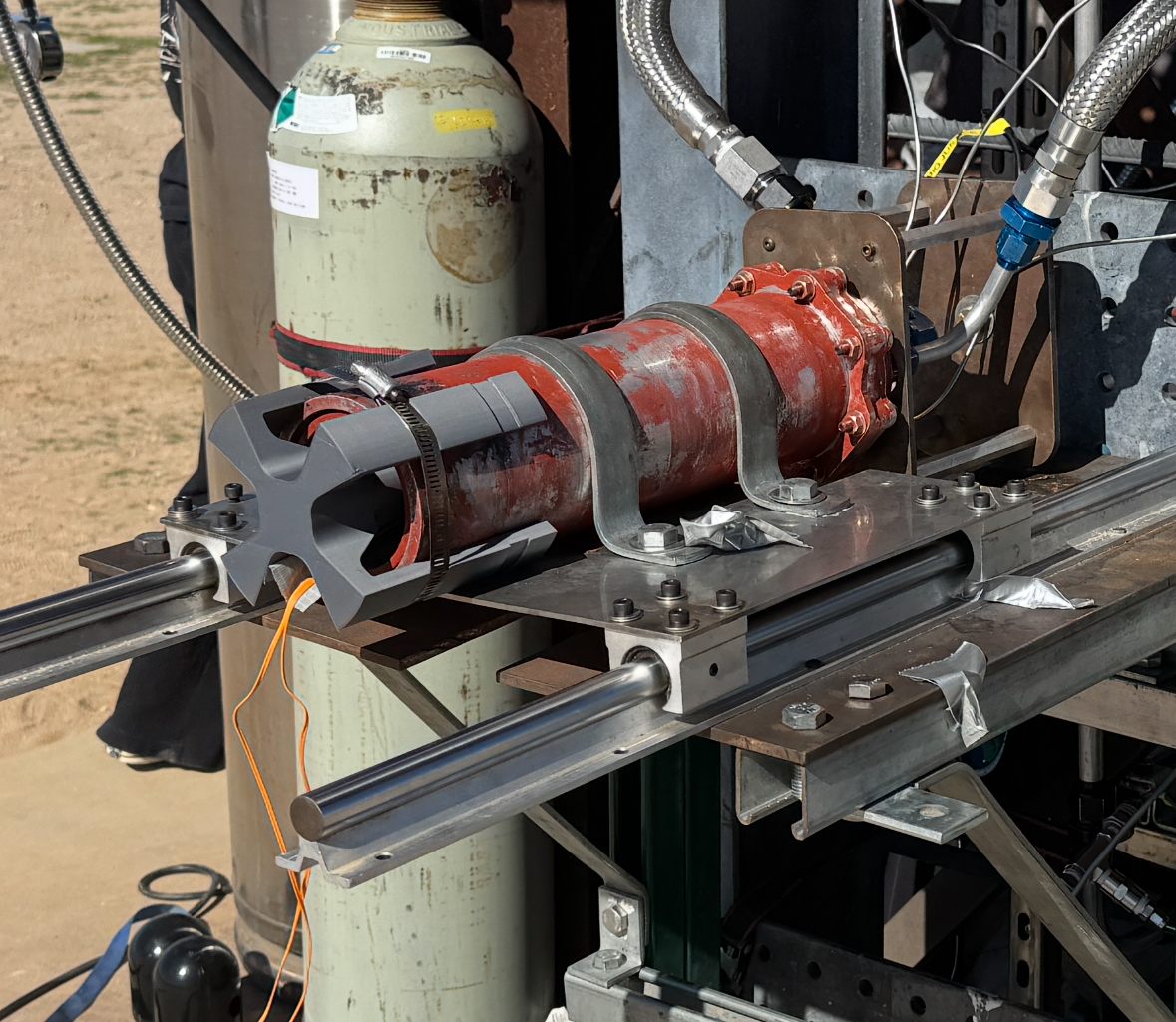
The use of a spark-plug type of igniter may offer an alternative to pyrotechnic ignition and possibly greater safety against backlighting and hard engine starts or simply catching something downrange on fire after the igniter is spit out. Changing the ‘immersed torch’ design from a pyrotechnic charge to a commercial spark plug design would be straightforward and only require the addition of a buzz box module into the existing firing circuit designs. The RRS may soon attempt this with one of the many liquid and hybrid projects being done at the society.

Dave Nordling and Steve Majdali contributed to this article.

For use of the RRS MTA, contact the RRS president.


MTA Launch Event, 2024-03-30

by Joel Cool-Panama, Secretary, Reaction Research Society


On Friday, 3/29/2024, Dimitri Timohovich was able to pick up and deliver the hydraulic equipment for the 60 foot launch rail.  Rushd Julfiker was able to come out and help him off load the equipment.  They then went up to the Butterfield’s home in Ridgecrest and picked up the shop equipment donated to the RRS.  They off-loaded that gear into the Dosa building and called it a night.

Early Saturday morning saw a fair amount of rain in the desert and the nice smooth road we used to get in and out of the MTA is once again a sloppy mess.  Even though it was slippery, all that planned to be at the MTA made it there.

With help from Dave Nordling, his friend Matt Giovannucci and Bill Nelson; Dimitri was able to put the shop equipment away into the Rockwell trailer and container 11.  The hydraulic equipment is sitting in front of container 14.

The RRS would like to thank the Butterfield family for their generous donation of the shop gear.  These items will greatly help the RRS in its future endeavors.  

 RRS member Wolfram Blume continues to make progress on his gasoline-fueled ramjet system but opted to postpone his work at the MTA to avoid the inclement weather on Saturday. He may have been the wiser man that day. The weather was very challenging on the drive into the MTA. Greater rainfall than expected throughout the morning made the western road very difficult but many made the journey. 

Dave Nordling served as pyro-op on that launch day bringing his friend, Matt Giovannucci, on what was a less than stellar day.  Cold temperatures and light rain persisted through the morning, but winds remained light and even stopped with the sun coming out that afternoon.  The road drained sufficiently to make the return drive easier but it was a mess.

New RRS members, Jeff and Chase Lang came to MTA and fired a series of six custom built H-sized solid motors. Member Jason Kobel joined them.  All seemed to perform as expected with a single ignition problem rectified by replacing the igniter and refiring that motor.  They had a model rocket they flew a few times from our 1010 rail on G-motors. After fixing a GPS tracker problem, they were able to retrieve their rocket downrange each flight.

Bill Nelson and Dave Nordling conducted fit checks of the first 1936 GALCIT rocket engine and its thrust stand replicated from the photos and scant information from JPL archives.  This was an important milestone for the LACMA funded project with American Artist.

Larger sandbags were brought to the MTA.  The Rice Hydro hydraulic hand pump owned by the society seems to have an internal seal or a check valve problem which prevented proof pressure testing of the methanol run tanks that day.  More work on the fuel and oxidizer feed and control system will take place next month.  The analog thrust measurement system consisting of a stylus and scrolling paper roll is still under design. Dimitri may have a suitable variable speed motor for driving it. We are holding schedule for a June event with the film crew.

A toilet auger and rotary snake has been put in the workspace in the toilet container which will help fix major clogging problems on the spot. Everyone has thus far been careful but it is better to have the means to unjam the plumbing on site and not need it than the alternative.

RRS President, Frank Miuccio, found a small roll-top desk for the Office Container 14, but will bring it to the MTA later.

Next month’s meeting will be at the gymnasium of the Mary Star High School in San Pedro on Friday, April 12th, which is the day before the 2024 RRS Symposium held at the same location.


MTA Work Event – January 20th, 2024

by Dave Nordling and Joel Cool-Panama, Secretary, RRS.ORG


The RRS held a work event at the Mojave Test Area (MTA) on Saturday, January 20th. The primary purpose of this meeting was to give Joel Feree, our contact with the Los Angeles County Museum of Art (LACMA), an in-person tour of the whole MTA, so that he could get an idea as to what we were working with for our collaboration with American Artist which will involve the recreation of the 1936 Guggenheim Aeronautical Laboratory at the California Institute of Technology (GALCIT) prototype liquid rocket engine. This was Joel Ferree’s first time at the MTA and he gained much insight into how we’ll be seeing the project through. Dimitri Timohovich also used his experience in the film industry to highlight some practical aspects for the production. Following this meeting, Dave Nordling, Dimitri, and Joel Ferree came up with a timeline for the project. Dave Nordling, serving as the project leader, is working hard to get hardware ready for an initial firing by our membership at the MTA. Once the system is proven to work reliably and safely, the static firing of this replica will be the centerpiece of the filming to take place at the MTA.

On the same day, four student representatives of Loyola Marymount University’s rocketry team came to meet with Dave Nordling. They intend to build a custom hybrid motor, which they plan to static fire at the MTA. Dave gave them some points on their motor and feed system designs, which they can certainly appreciate, given that this is their first experimental rocket project. Rushd Julfiker and Dave will continue to advise the team on their propellant loading system and ignition system, and they may well use a firing box of Dimitri’s design.

While there, Dave and Dimitri worked on moving some of the society assets from the Dosa Building to the new Bldg. 14 office container.  This was done partly to declutter the working space, in order to make it into a meeting and workspace once more. If the lease does end next year, then Polaris will be removing many items of theirs which are also in the Dosa Building, including refrigerators, stove, and laminar flow bench. Polaris is required according to the terms of the lease to notify the RRS Executive Council of the movement of their assets.

According to Dimitri, a company called Tortuga Industries has reportedly bought 183 acres of land along Munsey Road. According to the rumors, they are looking to turn their parcel into a private duck hunting reserve, complete with a large pond.

Dimitri also reported that Crisalli is taking the initiative to fix the northern road running along the eastern side of the MTA property. Gordon has so far filled in the trench near the northeastern corner of the property, removed the concrete barricades, and installed a gate across the road. He has reportedly been using this northern route himself, dragging it several times in the process. He reports that the 4 miles of the northern road leading to the highway is now certainly passable, albeit the creek bed is still soft as of this writing. The RRS still recommends all visitors and users of the MTA continue to use the western (Munsey) road from Cantil until further improvements can be made.  The RRS MTA has access gates along the eastern border but they are rarely used.

Next monthly meeting will be February 9th.

Next work event at the MTA is planned for February 17th. This will depend on planned Polaris operations which could close the access easement road. Coordination with Polaris will be required.