Spark Igniter System for a Rocket Engine

by Bill Nelson, RRS.ORG

This article describes the simple buzz box design I made for the GALCIT engine replica project done at the RRS MTA in early June of 2024.

For some background, the GALCIT replica engine design was a simple single-port of injection, slab-type of early prototype engine design using liquid methanol and gaseous oxygen. The engine was vertically fired and initially used pyrotechnic igniters set into the narrow diameter throat. After initial tests at the RRS MTA in 2024, just like what the Caltech team discovered in the Arroyo Seco in 1936, we found that pyrotechnic-ignition was too difficult to do given the problem of physical retention of the igniter in the engine. The pneumatic gust from the initial valve openings would eject the pyrotechnic igniters before the chamber mixture could be lit.
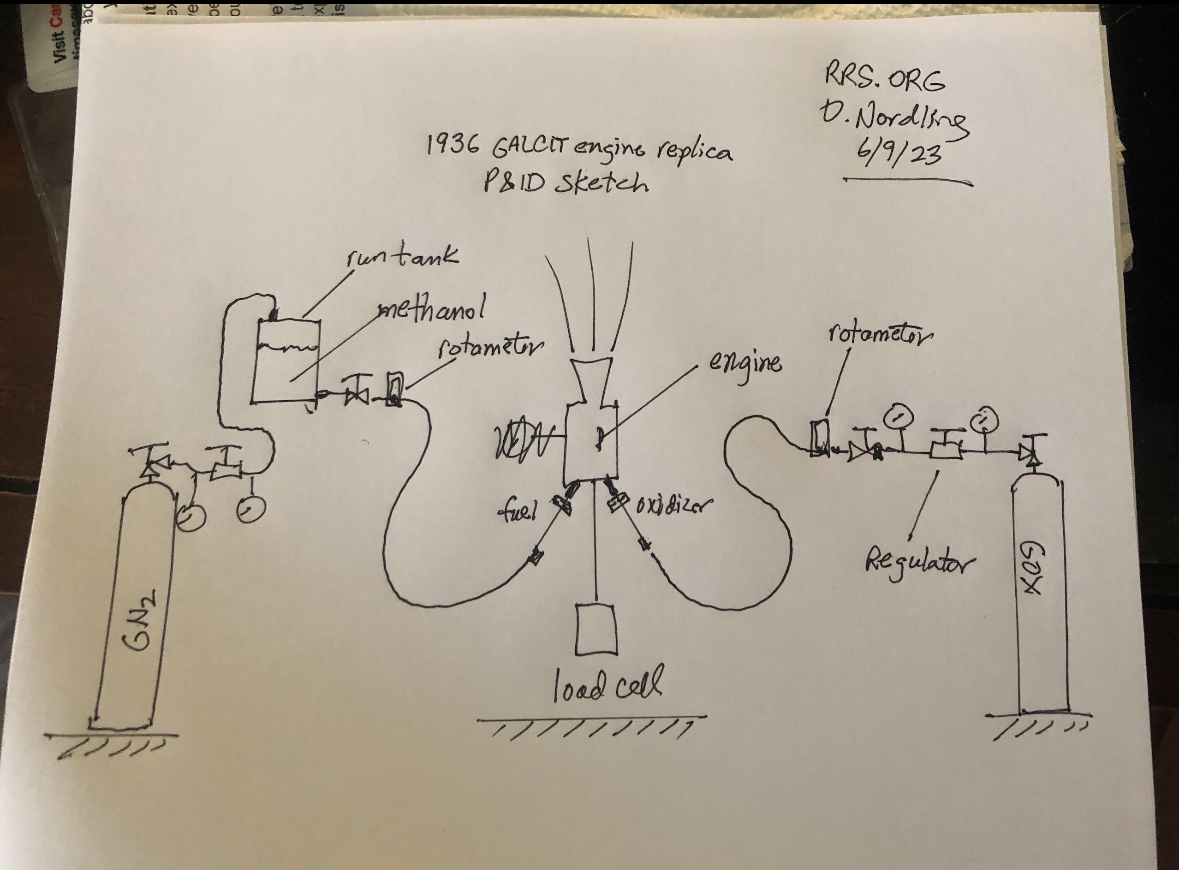
From one of the legacy JPL photos, it was clear that an automotive Model-T buzzbox and spark plug type of igniter was installed in the side of a later iteration of the engine design. When the RRS team made this modification, we had success in more reliable ignition of the engine. The problem was how to replicate a technology that has been obsolete for decades. Thankfully, there’s the internet and a lot of hobbyists and tinkerers.

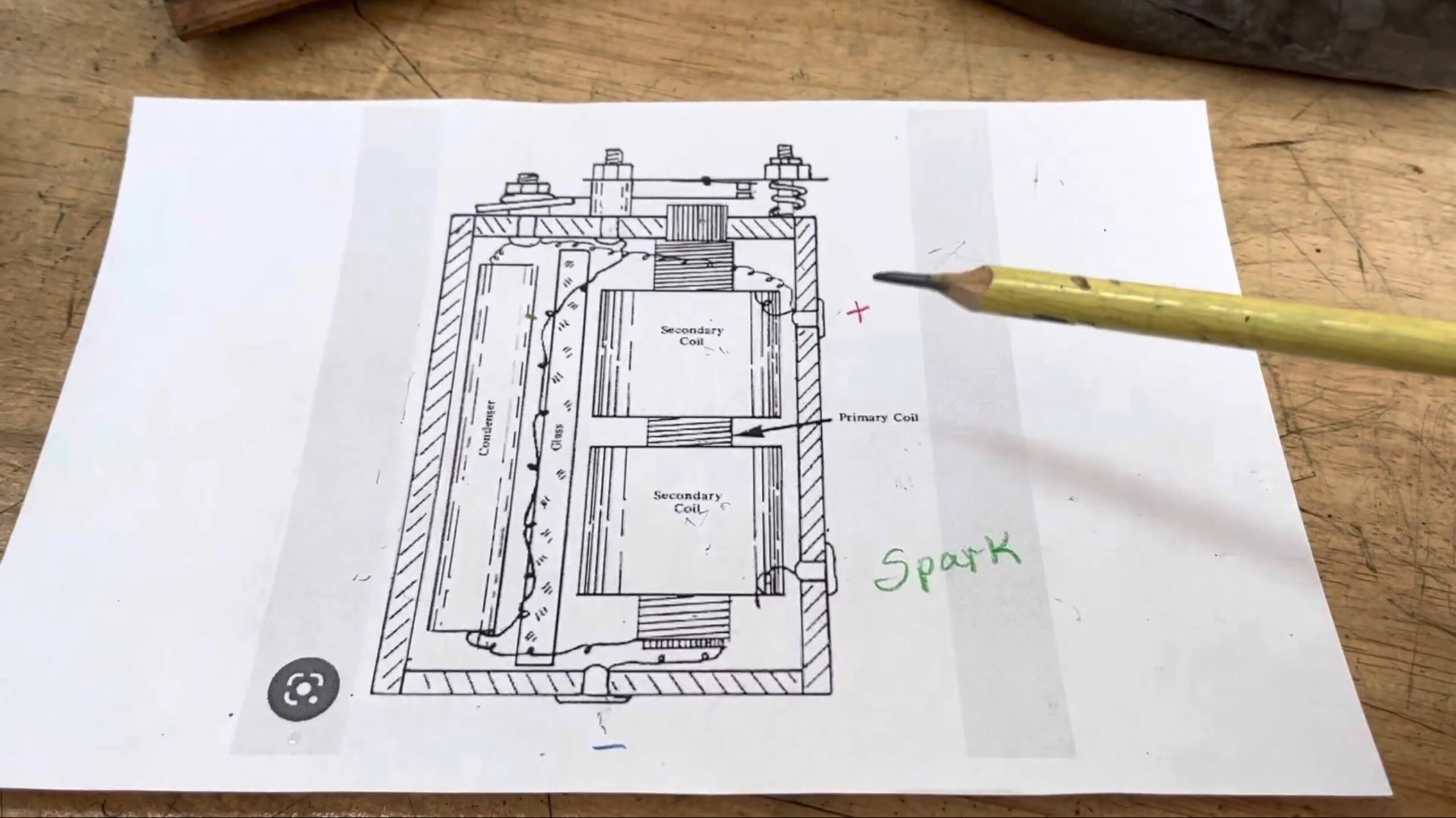
There are many other circuits with lots of electronics that can also be made if someone is so inclined. Most of these use ‘555’ timer chips, transistors, and other solid-state components and can be accessed with a search on the web. I’m sure there are many knowledgeable electronics people that could design their own.

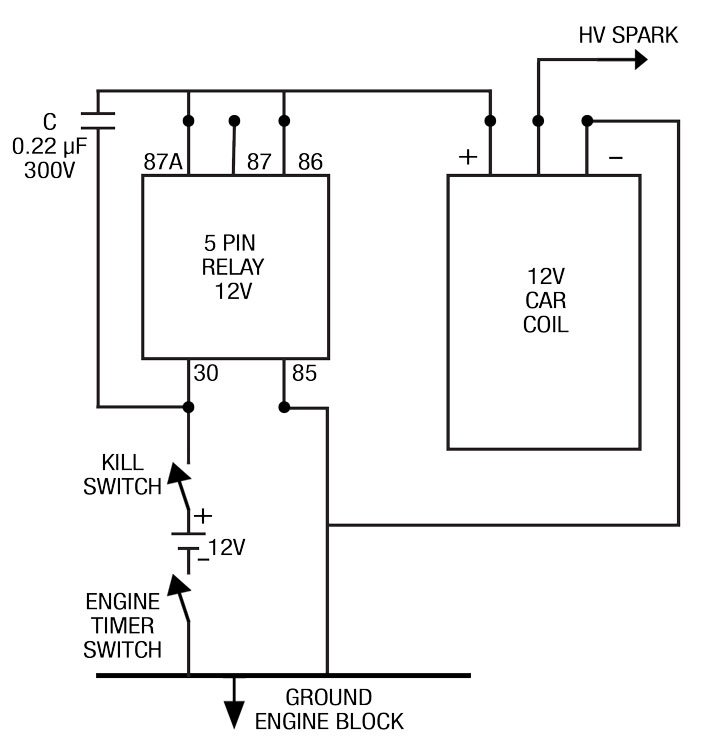
My design uses an automotive (transformer) coil, a capacitor (sometimes called a ‘condensor’), and a 5-pole automotive relay that is a single-pole, double-throw relay (SPDT) type. There is another simple approach which I will describe later.

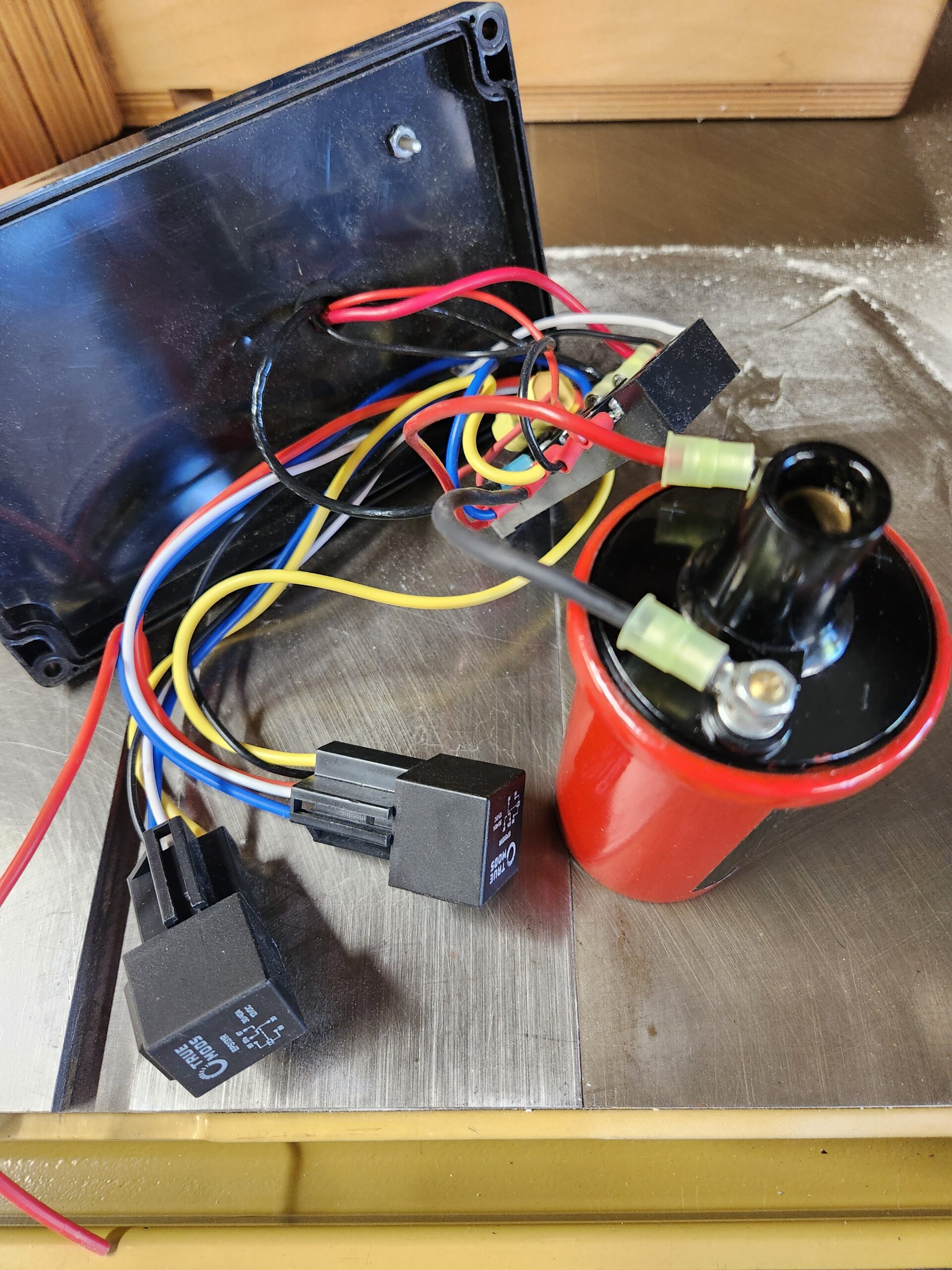
The circuit I used is very simple. When 12-volt DC power is applied to the relay pin marked ‘87A’ it will switch on and off at a rapid rate until the power is turned off. The relay will energize the automotive coil which in turn will fire the spark plug. As long as the relay is being energized, the coil will continue to produce sparks. This was advantageous to reliably firing the GALCIT replica engine with the liquid methanol and gaseous oxygen mixture. This simple system would most likely help others achieve ignition when other systems might fail. Below is a circuit diagram and a photo of the box I hurriedly made after our RRS team had trouble with the pyrotechnic firing approach. Only one relay was in the firing circuit, the other was a relay to control the circuit remotely from a separate battery.
Another approach uses a coil on plug design. These coils are used in modern cars. Instead of having one coil for all the cylinders, each cylinder has its own spark coil. I have not tried this but it appears to be simpler and have a much greater spark rate and a larger spark. Here is a circuit diagram and picture of one of these systems. This looks much better in my opinion and I will build one to experiment with. The write-up doesn’t say exactly how but I assume the spark pulse is generated as long as power is applied to the circuit.
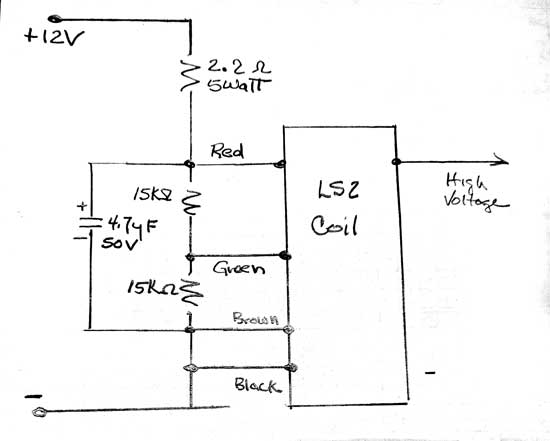
Both of the above circuits can be found at the link given below, searching under the term ‘buzz box’

gasenginemagazine.com

The first two listings are the ones to read.

There is not much more than this to these buzz box circuits except if you want to make it more complicated and expensive. These circuits just use common sparkplugs, hobby model gas engines (for model airplanes), small engines like those for weed whippers and chainsaws, or even spark ignition systems used in automobiles. There are also specialized plugs made just for rocket engines but much more expensive.

Below are some photos from the GALCIT replica engine in early June 2024 and how the sparkplug was mounted into the chamber interior. This is the middle ring of the modular slab engine design. We had one port drilled for mounting the sparkplug and the other tapped for a pressure gauge which we didn’t use (plugged).
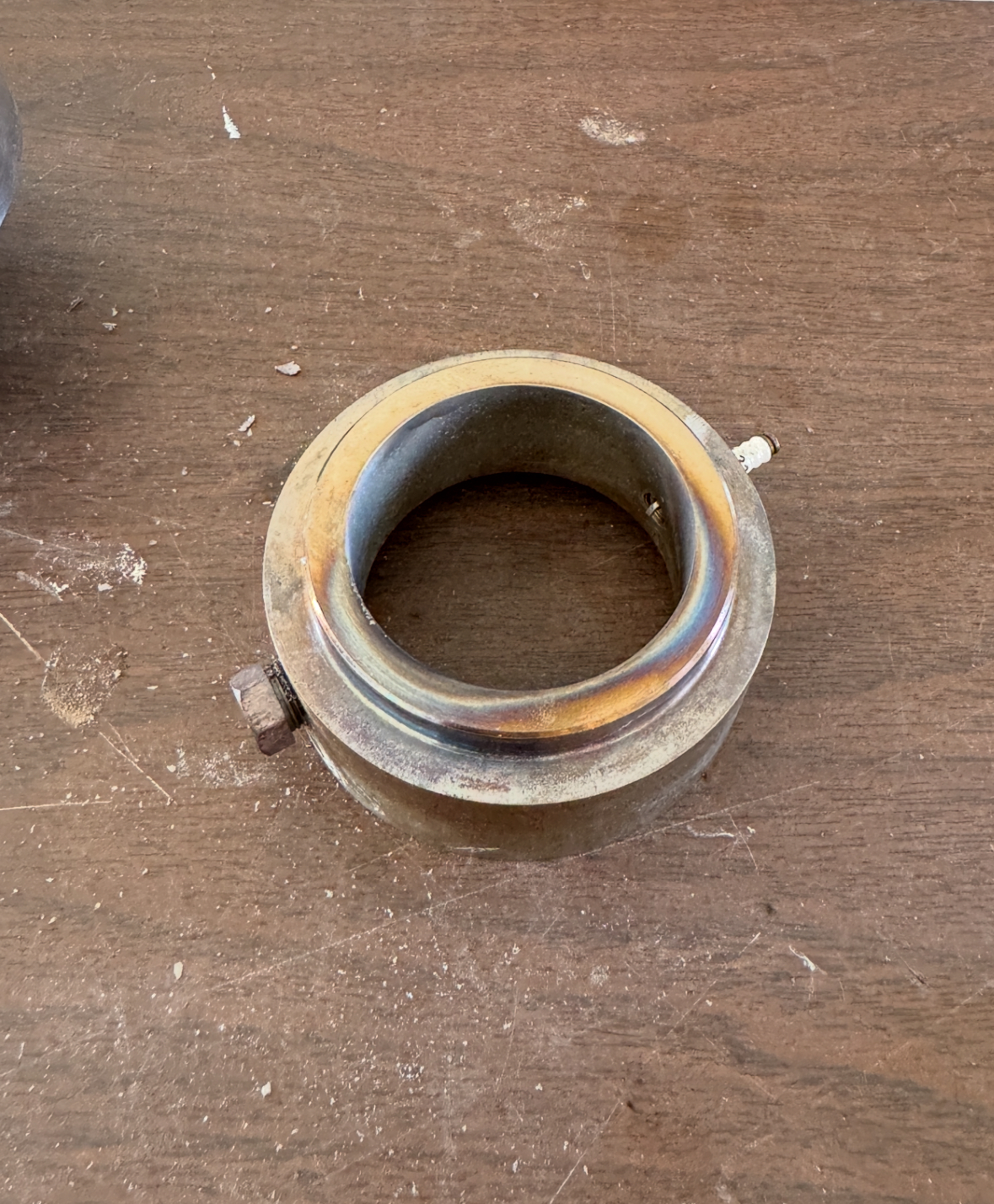
The spark plug we used lasted many firings in the rocket chamber with almost no damage other than some discoloration.
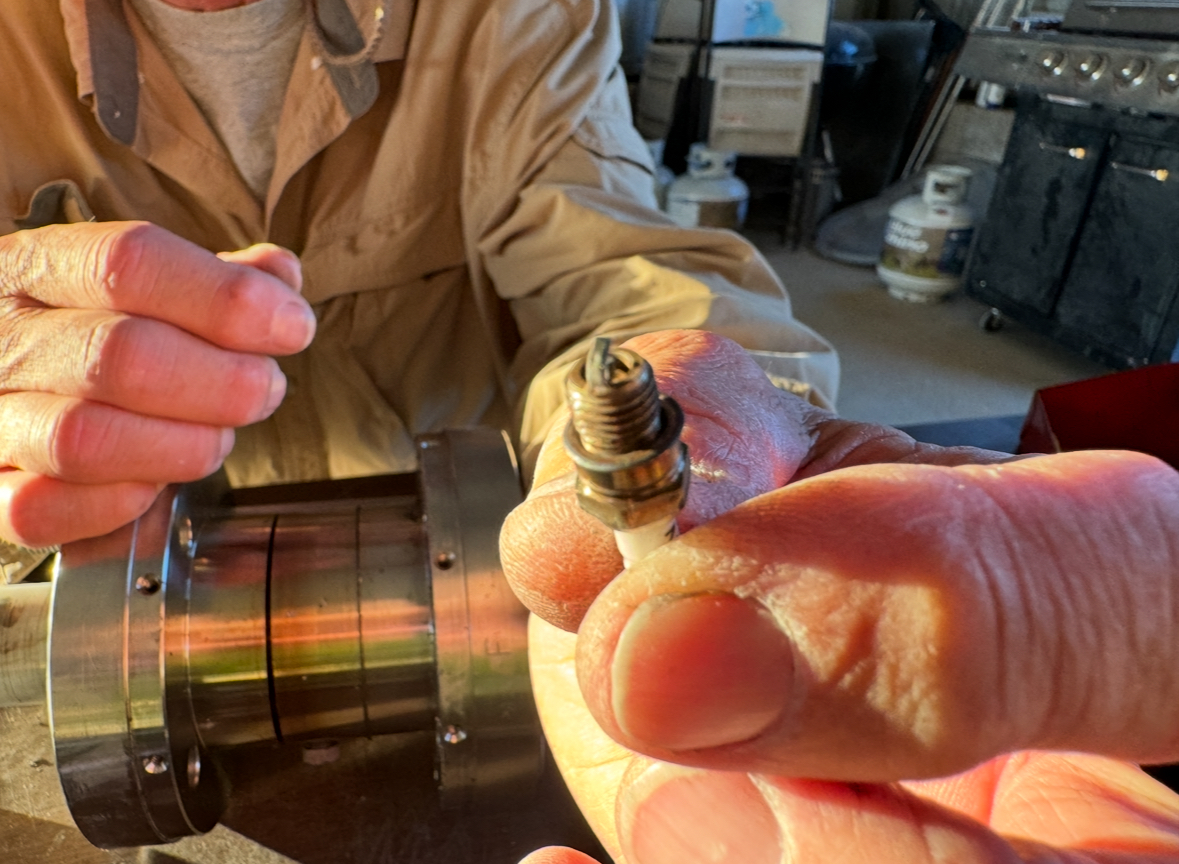
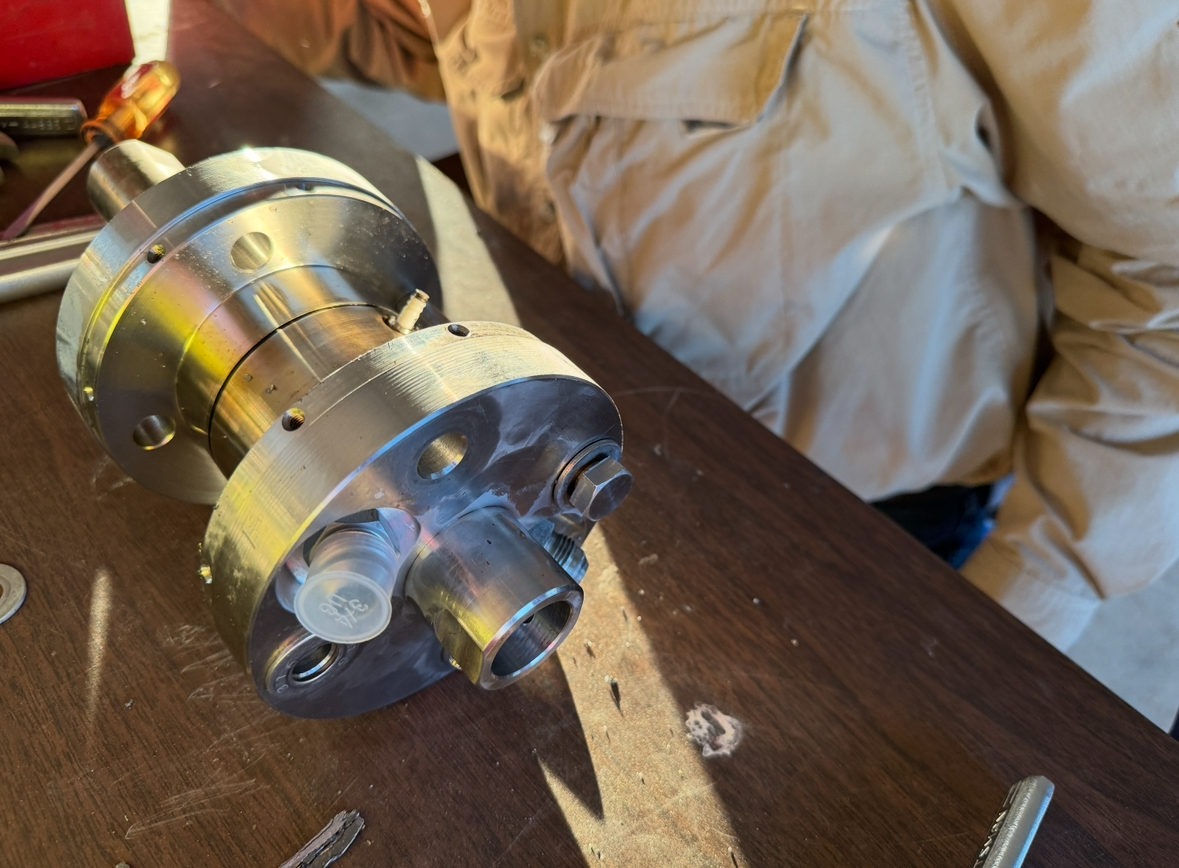
The spark plug can be seen sticking out of the middle ring of the engine. The injector ports are seen in the foreground, one still has a plastic cap covering it. The raised circular port is to mate the engine to its supporting thrust stand shaft as the engine fires upward.

Many liquid engines at the RRS MTA have nozzle-mounted pyrotechnic igniters which can work with the right design, firing sequence and precautions, but there are some significant problems and hazards with this approach.

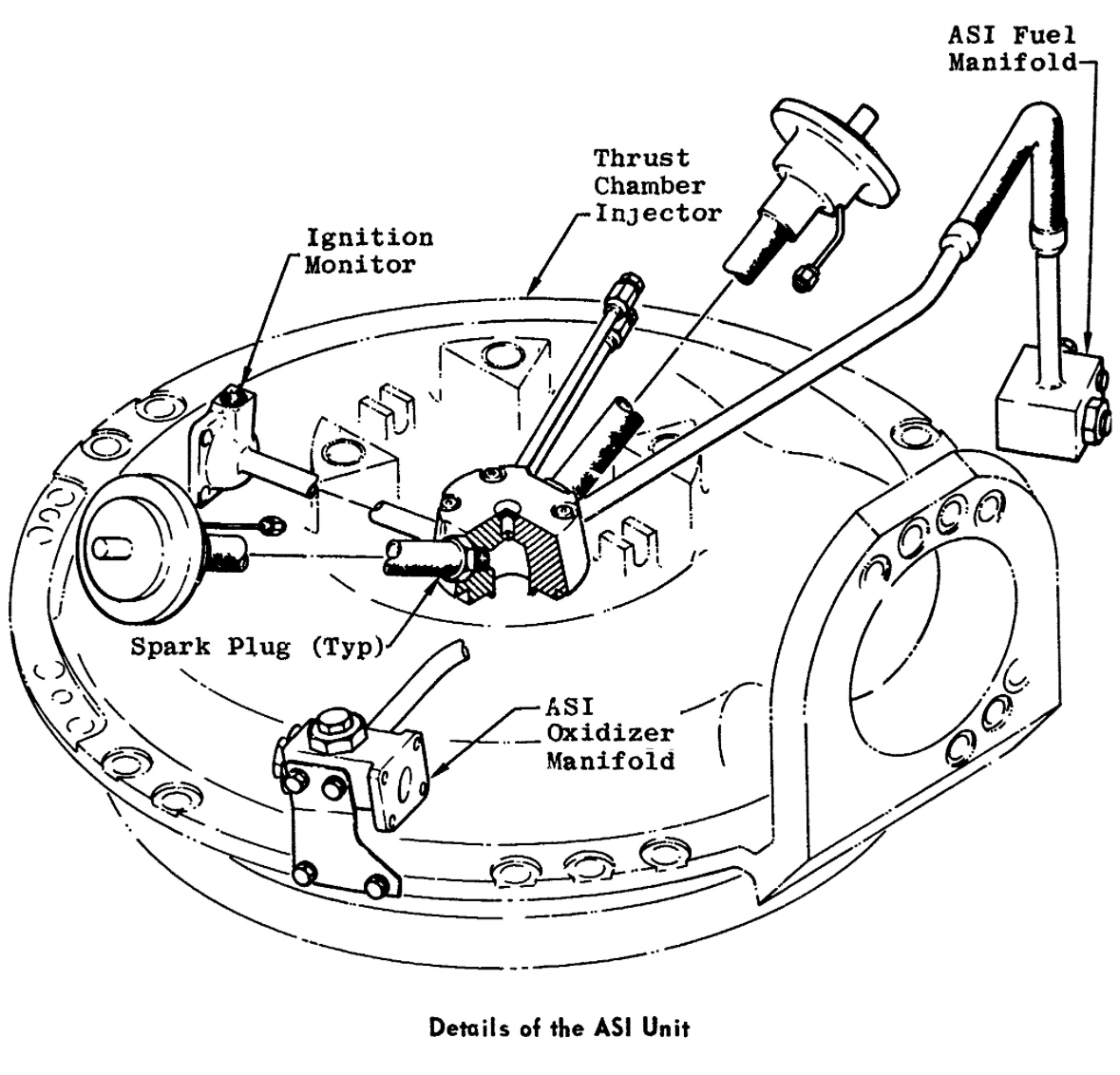
Modern rocket engines often have their igniters mounted into the injector body or chamber wall near the injector face, but this is easier to do with the greater area available on larger scale engines. Often, these augmented spark igniter (ASI) systems have a small fuel and oxidizer supply to provide a readily ignitable localized mixture to touch off the larger propellant flows in the injector. The picture below is from the Apollo-era J-2 engine. For smaller engines, the igniter is placed directly into the chamber in a location that can reliably and quickly light the initial propellant flows into the chamber.
Most hobbyist designs are smaller where head-end ignition isn’t easy or simply not practical, thus nozzle mounted designs are commonly used.
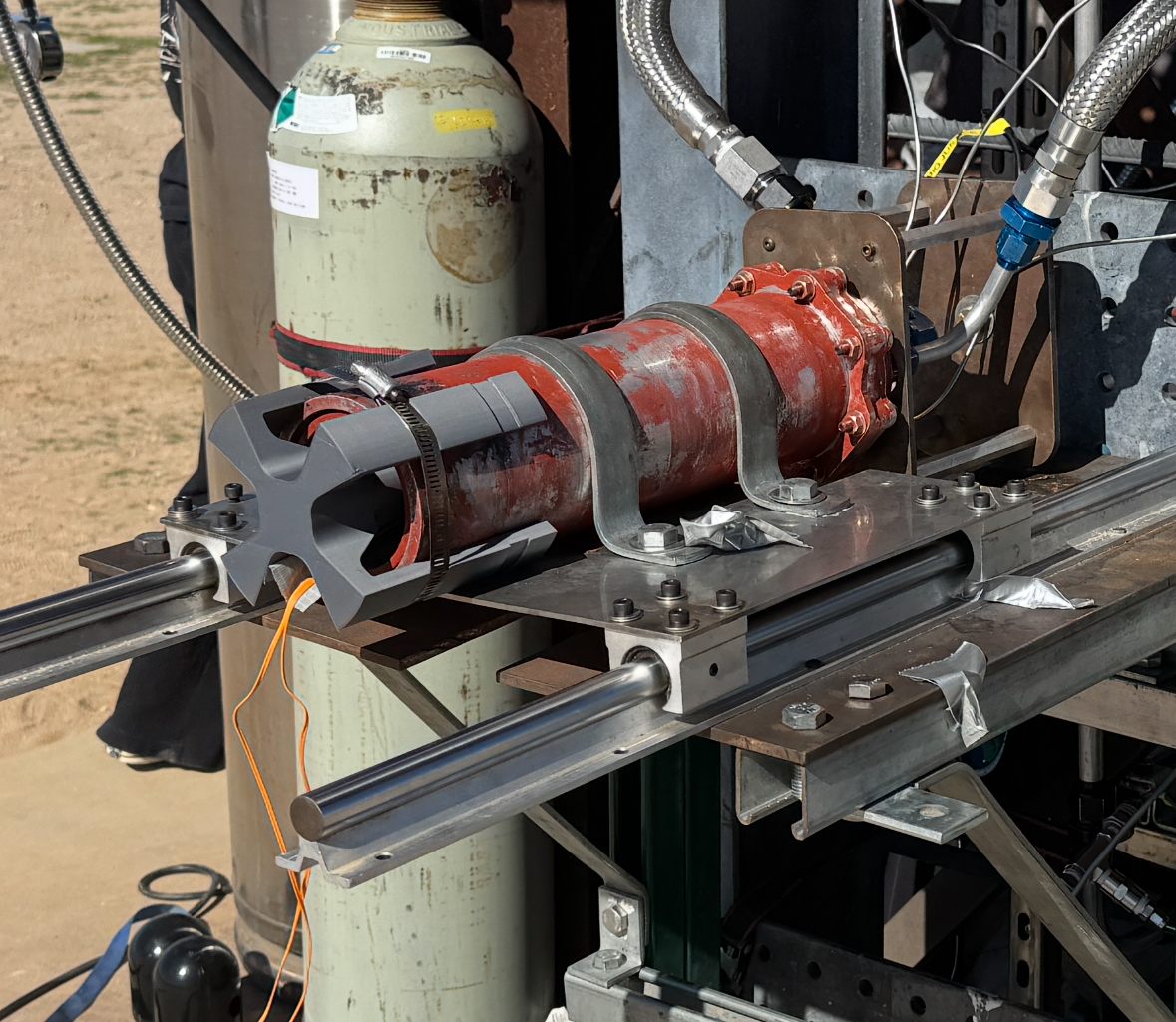
The use of a spark-plug type of igniter may offer an alternative to pyrotechnic ignition and possibly greater safety against backlighting and hard engine starts or simply catching something downrange on fire after the igniter is spit out. Changing the ‘immersed torch’ design from a pyrotechnic charge to a commercial spark plug design would be straightforward and only require the addition of a buzz box module into the existing firing circuit designs. The RRS may soon attempt this with one of the many liquid and hybrid projects being done at the society.

Dave Nordling and Steve Majdali contributed to this article.

For use of the RRS MTA, contact the RRS president.


MTA Launch Event, 2024-09-07

by Dave Nordling, RRS.ORG


The Reaction Research Society held a launch and firing event to honor the memory of Richard Garcia. His wife, Jeannie Riddles, his brother, Russell, and his aunt and cousin were present to witness the events of that day at our Mojave Test Area. I served as the pyrotechnic operator in charge with Dimitri Timohovich and Leanna Lincoln serving as my apprentices for the several operations we conducted that day with our membership and invited guests. RRS president, Frank Miuccio, was also present for this important event.

The safety briefing was given to all in attendance at 11AM with special recognition given to our honored guests. The weather was very hot (105F) which is typical for early September, but under low winds and a few high clouds.

We had several very different projects that day with many of our members coming to demonstrate their current projects and some bringing new builds. RRS member Jerry Fuller and his daughter Charlotte were also present that day.

Dimitri and Leanna mixed a batch of micrograin from the new zinc stock and our existing sulfur supplies. Chase Lang had a standard alpha and Bill Nelson a standard beta for launch. Both conducted safe loading operations in the RRS loading area.

With everyone under cover and passing air and road checks, the launch of the alpha still showed some of the initial low thurst stalling during firing before exiting the launch rail and being recovered downrange. The beta fired but showed an even lesser performance not managing to generate enough thrust to even leave the launch rail. Both rockets were returned for examination. Most likely cause is excessive moisture absorption into the sulfur, but that is under debate. Clumpiness of the powdered oxidizer was noticed during the mixing operation but a propellant sample burn beforehand showed no problems. it was thought that the tumbling process would be sufficient to homogenize and dry it out. Sulfur is not expensive and the society may consider buying fresh stock and improving the storage conditions.

Fourth year UCLA graduate student, Nick Kuenning, and his advisor, Prof. Mitch Spearrin, were present with a few UCLA Rocket Project members to static fire their new portable rig at the MTA. The main objective was to demonstrate the new oxidizer tank they added and run a prior engine design to check out the whole system. The test also served to show just how far UCLA has come in the many years since the liquid rocket program began at UCLA. Richard Garcia was one of the first RRS members to help UCLA in their early days of the Rocket Project. I attended UCLA PDR’s and CDR’s with him. Nick was just a freshman at the time. It was very generous of the UCLA team to conduct this firing in Richard’s honor during the last of the summer quarter when few students were back from vacation. The crew of four ran a clean and steady full-duration burn of their ablative lined engine on an impinging ethanol and LOX injector used with prior success. The burn went a full duration of 20 seconds with clean startup and shutdown. It is a very nice static fire rig and will give the team many opportunities to continue developing better engines. Nick is planning to speak at the RRS monthly meeting to share their results.

Mike Kramer and John Tsohas came to the RRS MTA as guests. Mike and John fired a few hybrid rockets that day and later joined as members. John had fired with the RRS several years ago and it was good to welcome him back. They had several successful launches and recoveries with the nitrous oxide loading and firing rig they brought.

Bill Inman brought the latest version of the Solar Cat which he and RRS member Dale Talcott built. The Solar Cat is a steam rocket mobile launcher that uses a parabolic reflector type of solar furnace for heating. It is an impressive piece of engineering with the ability to track the sun’s position in the sky and reach steam pressures up to 465 psig before moving the rocket tube into a vertical firing position. It is operated remotely and uses common off the shelf hardware.

After some considerable setup period the day prior in the northern expanse of the MTA, sun conditions that day were inconsistent however after 3:30pm a break in the clouds allowed a one hour period of insolation sufficient to reach adequate steam pressure for launch. Launch ended up not occurring as there was a mechanical snagging problem with one of the harnesses impeding the movement of the release mechanism.

Bill made the decision to abort the launch and remotely opened the vent to relieve the system dumping the load in a safe direction. Minor improvements will be made to the design to prevent similar issues and help avoid problems in deployment and stowing on the trailer. The Solar Cat design has advanced much and has had a few successful firings in Nevada. With Dale and Bill’s continued perserverence, the Solar Cat will one day fire from the MTA. It is a very long drive from Carson City, but Bill’s dedication to that test is a true honor to Richard Garcia and the passion he had for amateur and professional rocketry.

The RRS would like to thank our guests, our visitors and especially our membership for making this event possible.

The launch events will be discussed at the monthly meeting on Friday, September 13th, at 7:30pm at the front office of the Compton/Woodley Airport. RRS meetings are always on the 2nd Friday of each month. Contact the RRS secretary for details.


MTA Launch Event, 2024-06-29

by Dave Nordling and Chase Lang, Reaction Research Society


The Reaction Research Society (RRS) held a small launch event at private testing site, the Mojave Test Area (MTA) on Saturday, June 29, 2024. Dave Nordling served as the pyrotechnic operator in charge for this event. RRS director of research, Rushd Julfiker, was also present to oversee the event. The weather was hot, reaching 100F, and the winds were holding still up until about 1pm. New associate member, Mia Marshall, came out to the MTA for the first time and we were glad to show her around the MTA and discuss the kinds of projects our members do.

On Saturday, June 29th, Chase and Jeff Lang conducted a series of tests to evaluate two experimental solid rocket propellants: Performance Fast 2 (PF2) and the Basic Batch. Each of the three “I”-sized 38mm motors fired correctly to the expected burn duration. The primary objective was to characterize the burn rate of PF2 using three test motors, each fitted with progressively smaller nozzles. Additionally, we aimed to test fly a rocket powered by Basic Batch propellant, which had been previously characterized.

For the PF2 testing, we prepared three motors, each with a different nozzle size to observe the effects on the burn rate. The tests were conducted on a custom test stand equipped with a load cell and pressure transducer for precise measurement of thrust and chamber pressure. The data from only the last two of the three firings were recorded and plotted below.

Following the PF2 tests, we launched a rocket powered by a reloaded 38mm Aerotech DMS motor loaded with Basic Batch propellant. This propellant had previously been characterized during a prior visit to the RRS, where we ended up with unburned grains due to a low Kn value. These grains were repurposed for the current test. The rocket achieved an altitude of over 6,000 feet and was successfully recovered with the aid of a custom-built Radio Direction Finding (RDF) beacon. The rocket was recovered downrange to the east thanks to higher winds that picked only just before launch after 1PM that day.

Also joining us that day was associate member, Bill Nelson. Stepping into our crew cabin, B/15, has been challenging given the large difference in height between the door and ground outside. Bill built the society a good step which makes getting in and out much easier.

The crew cabin was used for the temporary storage of hardware and tools as well as an inside work area during the cooler earlier months for the 1936 GALCIT liquid rocket engine replica built for American Artist and the Los Angeles County Museum of Art (LACMA). Given the success of the firing and filming event on June 8-9th, the project team brought all hardware and tools back to our shared workspace at the Compton/Woodley Airport where the pieces can be prepared for this fall’s exhibition at LACMA. The project team was grateful to Rushd and Mia for assisting with the moving of parts into trucks.

The next RRS monthly meeting will be July 12th at the front office of the Compton/Woodley Airport at 7:30pm. Meetings are always the 2nd Friday of each month and a good opportunity to discuss projects you’d like to do at the RRS MTA. Anyone interested in attending a meeting is welcome. Please contact the RRS secretary or any member of the executive council. Teleconference information can be provided for those attending remotely.

Chase Lang has asked the society to fund the building of a second 1515 launch rail at the RRS MTA. The executive council is assessing his proposal. The RRS is expanding our launch capabilities now that significant improvements to our basic infrastructure are completed. The council will likely discuss this at the next meeting.

Also RRS associate member, Zach Lesan, has made significant progress in building the mobile trailer for the society’s LNG horizontal cryogenic liquid cylinder. We hope to complete construction and testing successfully and have this asset ready for safe use this fall.

Next event at the RRS MTA will be with Aerospace Corporation as our client. Osvaldo Tarditti will be the pyrotechnic operator in charge. Also, several of our newer members have indicated interest in flying micrograin alphas at a forthcoming event. Jim Gross may oversee that event as the pyro-op in charge when the president schedules it. By society policy, all members and outside parties interested in using the RRS MTA or just visiting the site must first contact and be approved by the RRS president.